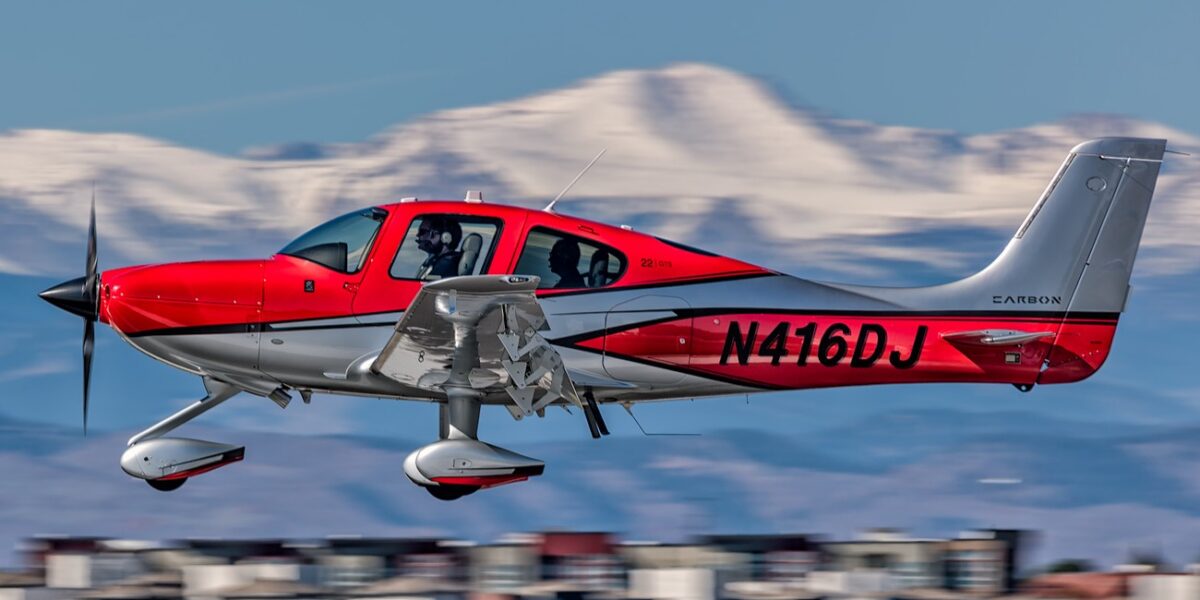
The Cirrus SR22 has dominated general aviation sales for over two decades, outselling every other piston single since 2003. With over 7,000 delivered worldwide, this high-performance aircraft combines speed, comfort, and the revolutionary CAPS parachute system that’s saved more than 200 lives.

Quick Answer: The Cirrus SR22 is a four-seat, single-engine piston aircraft with a 310 hp Continental IO-550-N engine. It cruises at 183 knots true airspeed, has a useful load of 1,100 pounds, and features the Cirrus Airframe Parachute System (CAPS). New SR22 G7 models start around $850,000, while used G3-G5 models range from $350,000-$650,000.
Performance Specifications
The SR22’s Continental IO-550-N produces 310 horsepower, giving the aircraft impressive performance numbers. Maximum cruise speed reaches 183 knots at 75% power, with a best economy cruise of 165 knots burning 13.5 gallons per hour. The turbocharged SR22T pushes that to 213 knots at altitude.
Takeoff distance over a 50-foot obstacle runs about 2,135 feet at sea level, standard conditions. Rate of climb exceeds 1,400 feet per minute at gross weight. Service ceiling hits 17,500 feet for the normally aspirated version, while the SR22T reaches 25,000 feet.
Range depends on fuel load and power setting. Standard 81-gallon tanks provide about 900 nautical miles with reserves at economy cruise. The extended 92-gallon option stretches that to over 1,000 nm. Most owners see 4-5 hours of practical endurance.
The CAPS Parachute System
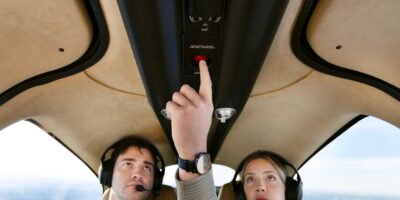
Every SR22 includes the Cirrus Airframe Parachute System – a whole-aircraft ballistic parachute that deploys in emergencies. A solid rocket motor pulls the chute from the airframe, lowering the entire aircraft to the ground at about 17 feet per second descent rate.
CAPS has been deployed over 130 times with more than 250 survivors. The system works best above 1,000 feet AGL and below Vne. Cirrus requires CAPS repacking every 10 years at a cost of $15,000-$20,000 depending on generation. Insurance companies recognize CAPS value – policies run 15-25% lower than comparable aircraft without parachutes.
The psychological benefit matters too. Knowing you have an ultimate backup changes how pilots approach emergencies. Rather than attempting marginal saves, CAPS-equipped pilots can focus on stable flight while evaluating options.
Garmin Avionics Suite
Modern SR22s feature Garmin Perspective+ avionics – essentially a certified G1000 system. Two large primary flight displays show synthetic vision, terrain awareness, traffic, and weather. The touchscreen-controlled system integrates autopilot, engine monitoring, and navigation into one seamless interface.
The GFC 700 autopilot includes envelope protection, underspeed and overspeed alerts, and electronic stability protection. Level mode returns the aircraft to wings-level flight at the push of a button – invaluable in spatial disorientation situations.
Earlier G3 models (2008-2016) used the original Garmin Perspective without touchscreens. These systems remain capable and supported, though they lack some newer features. G1-G2 aircraft have Avidyne Entegra displays – still functional but increasingly dated.
Cabin Comfort and Design
The SR22 cabin measures 49 inches wide – among the roomiest in its class. Four adults fit comfortably with reasonable baggage. The composite construction eliminates rivets and seams, creating smooth interior surfaces. Large windows provide excellent visibility and natural light.
Front seats adjust fore-aft and recline. The center console between front seats houses cup holders, USB charging, and storage. Rear passengers get similar amenities with good legroom for the class. Baggage compartment holds 130 pounds in the main area plus smaller amounts in wing lockers.
Climate control uses a vapor-cycle air conditioning system that actually works – a significant improvement over older piston aircraft. Noise levels run lower than most piston singles thanks to the composite construction and sound insulation.
Operating Costs
Hourly operating costs for an SR22 run $200-$300 depending on fuel prices and how you calculate reserves. Fuel burn averages 15-17 gallons per hour at typical cruise settings. At $6 per gallon, that’s $90-$100 just for fuel.
Annual inspection costs range from $3,000-$6,000 depending on findings. The Continental IO-550-N has a 2,000-hour TBO with overhauls running $50,000-$60,000. Plan on $25-$30 per hour in engine reserves. CAPS repacking every 10 years adds another $1,500-$2,000 annually when amortized.
Insurance varies dramatically by pilot experience. Low-time pilots might pay $12,000-$15,000 annually. Experienced pilots with instrument ratings and Cirrus time often see $5,000-$8,000. The aircraft’s high value and performance capabilities drive insurance costs higher than trainer-class aircraft.
Training Requirements
Cirrus recommends their factory transition training for all new owners. The standardized program covers aircraft systems, Garmin avionics, and emergency procedures including CAPS. Most pilots complete 10-15 hours of dual instruction over several days.
Insurance companies typically require factory training or an equivalent approved program. Many mandate additional requirements for low-time pilots – sometimes 25-50 hours with a Cirrus instructor before solo flight. The SR22’s high performance and sophisticated systems demand proper training.
Ongoing proficiency matters too. The Cirrus Owners and Pilots Association (COPA) offers regular training events and an active community. Annual recurrent training maintains insurance discounts and keeps skills sharp. The investment in quality training pays dividends in safety and enjoyment.
Buying Considerations
New SR22 G7 models start around $850,000 and climb past $1 million with options. The turbocharged SR22T adds about $100,000 to the base price. Custom paint, premium interior, and additional avionics push prices higher.
Used market pricing depends heavily on generation. G3 models (2008-2016) range from $350,000-$500,000. G5 aircraft (2017-2020) command $500,000-$700,000. Earlier G1-G2 models can be found for $180,000-$350,000 but come with older avionics and higher maintenance considerations.
Pre-purchase inspection by a Cirrus-experienced shop is essential. The composite airframe requires specific knowledge to inspect properly. CAPS condition, engine health, and avionics functionality are critical checkpoints. Budget $3,000-$5,000 for a thorough pre-buy.
Who Should Buy an SR22?
The SR22 suits pilots who want speed, comfort, and safety technology in a piston single. Regular cross-country travelers benefit most from the 180+ knot cruise speeds. Four-seat capability with real useful load makes family travel practical.
Business users appreciate the speed and professional image. A 500-mile trip that takes 4+ hours in a Cessna 172 becomes a 2.5-hour flight. The time savings add up quickly for frequent travelers.
Flight training isn’t the SR22’s strength – operating costs and insurance for primary training make little sense. But for instrument training and building cross-country experience after the private certificate, the SR22 excels.
The Competition
The Cessna TTx offers similar speed with a different design philosophy. The Diamond DA50 RG provides European engineering and diesel efficiency. The Piper M350 adds pressurization at higher cost. The Mooney M20 series delivers speed with lower acquisition cost but less cabin room.
None match the SR22’s combination of performance, comfort, safety systems, and resale value. The CAPS parachute remains unique among certified production aircraft in this class. That combination explains why the SR22 continues outselling all competitors combined.
Conclusion
The Cirrus SR22 earned its best-seller status through genuine innovation and continuous improvement. Modern avionics, the CAPS safety system, comfortable cabin, and strong performance create a compelling package. Operating costs run higher than basic four-seaters, but the speed and capability justify the investment for serious travelers.
Whether buying new or used, the SR22 represents the current state of the art in piston singles. Factory support remains strong, the owner community provides excellent resources, and resale values hold well. For pilots ready to step up to high-performance flying, the SR22 deserves serious consideration.


Leave a Reply