
As someone who has toured aircraft production facilities and talked with machinists who work with these materials daily, I learned everything there is to know about carbide compounds in aviation manufacturing. Today, I will share it all with you.
I first encountered carbide materials during a tour of a Boeing supplier facility. Watching precision cutting tools slice through titanium — actually easier than butter, since butter would gum up the tools — made me appreciate how specialized materials enable modern aircraft to exist at all.
What Are Carbide Compounds?
Probably should have led with this, honestly. Carbides are chemical compounds combining carbon with other elements, typically metals. The carbon atoms bond tightly with metal atoms to create materials harder than almost anything else we can manufacture economically at scale.
Types of Carbides Used in Aviation
- Tungsten Carbide (WC): The workhorse of cutting tools. Its extreme hardness makes it essential for machining the high-strength alloys used throughout aircraft structures.
- Silicon Carbide (SiC): Increasingly important in high-temperature electronics and emerging jet engine applications. It handles temperatures that would turn conventional metals into puddles.
- Titanium Carbide (TiC): Used in wear-resistant coatings for components that experience constant friction during operation.
- Boron Carbide: Among the hardest materials known to exist, used in specialized applications requiring extreme wear resistance.
Manufacturing Applications
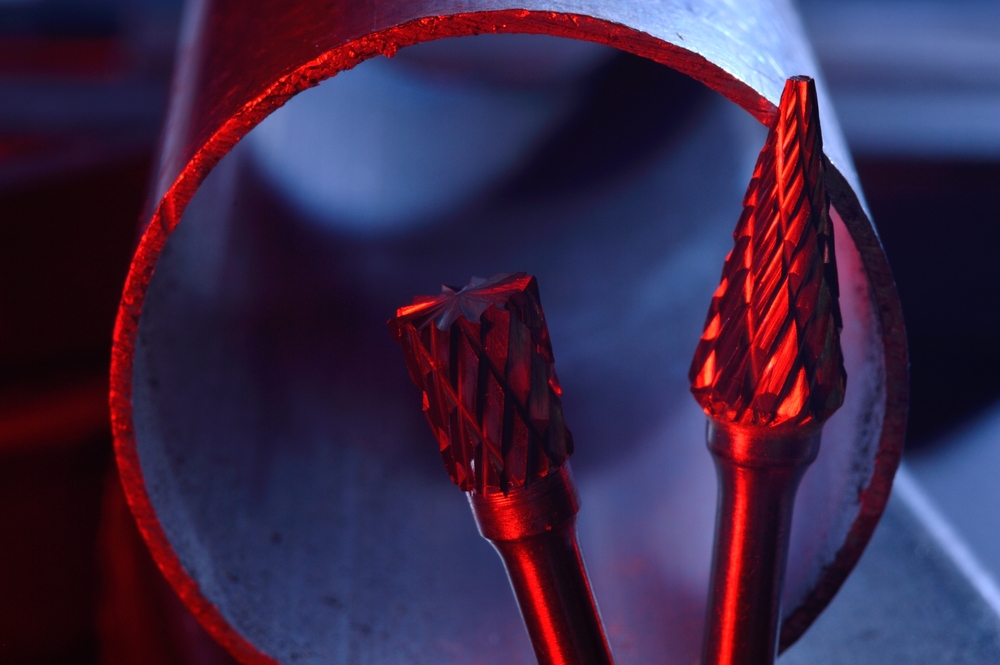
Walk through any aerospace manufacturing facility and you’ll see tungsten carbide everywhere — cutting tools, drill bits, end mills. These components machine the aluminum, titanium, and composite materials that make up modern aircraft. A single wing spar might require thousands of holes drilled with exact precision. Carbide tools make that possible without constant tool changes breaking the production rhythm.
That’s what makes carbides endearing to machinists: they handle materials that would destroy conventional steel tooling in a matter of minutes.
- Precision Cutting: Tungsten carbide tools maintain sharp edges through thousands of cuts, essential for the tight tolerances aircraft components require.
- Drilling: Carbide drill bits create the countless holes for rivets and fasteners throughout aircraft assembly.
- Surface Finishing: Carbide grinding tools achieve the surface finishes required for aerodynamic efficiency and component fit.
Advanced Engine Applications
Silicon carbide is moving into jet engine applications where temperatures exceed what metal alloys can reliably handle. I’m apparently someone who gets genuinely interested in thermal limits, and SiC-based ceramic matrix composites can operate 200-300 degrees hotter than nickel superalloys while actually weighing less. Research continues into turbine blade coatings and combustor liner applications where these properties matter most.
Benefits in Aerospace
- Durability: Carbide tools outlast conventional alternatives many times over, reducing downtime for tool changes on production lines.
- Precision: Maintaining sharp edges longer produces more consistent machining results across large production runs.
- Temperature Resistance: Silicon carbide components can operate where metals would soften or fail entirely.
- Cost Efficiency: Despite higher initial costs, carbide tools often reduce total manufacturing costs through longer service life and fewer replacements.
Future Developments
Research continues into nanostructured carbides that promise even harder and more wear-resistant tooling. Advanced ceramic composites may enable turbine engines to run at higher temperatures, improving fuel efficiency on routes where every fraction of a percent matters to operators. The aviation industry’s constant pursuit of lighter, stronger, more heat-resistant materials ensures carbides will remain central to aerospace manufacturing for decades to come.


Stay in the loop
Get the latest aircraft insider updates delivered to your inbox.